

Accelerating Progress: How PDA Drives AI Innovation in Healthcare

Artificial intelligence (AI) and machine learning (ML) are increasingly integrated into pharmaceutical manufacturing and quality management systems, offering significant potential to enhance operational efficiency, improve product quality, and enable real-time decision-making.
These technologies can process large volumes of data rapidly, supporting predictive analytics, anomaly detection, and process optimization. While the benefits are substantial, their adoption introduces unique challenges related to regulatory compliance, transparency, and system validation.
AI-driven systems provide several advantages over traditional approaches. Predictive maintenance enables early identification of equipment failures, reducing downtime and associated costs. Process optimization improves resource allocation and throughput efficiency, while advanced quality control methods detect defects and deviations with greater speed and accuracy. Real-time monitoring allows a shift from static batch validation to dynamic, predictive process control. Collectively, these capabilities can lead to improved product quality, reduced waste, faster time-to-market, and ultimately, better patient outcomes.
Despite these benefits, AI and ML introduce complexities that challenge existing regulatory frameworks. Many AI models operate as “black boxes,” making it difficult to ensure transparency and explainability. Continuous learning algorithms may evolve over time, complicating validation and lifecycle management. Additionally, maintaining data integrity and mitigating algorithm drift require robust governance and monitoring strategies. Regulatory agencies, including the U.S. Food and Drug Association (FDA) and European Medicines Agency (EMA), have begun issuing discussion papers and guidance on AI/ML in drug development and manufacturing, but harmonized global standards and clear expectations for validation, documentation, and risk management remain in development.
The Parenteral Drug Association (PDA) is actively engaged in facilitating the responsible adoption of AI/ML within CGMP environments. Its initiatives include developing technical guidance for AI implementation in continuous process verification, digital twins, and multivariate process control. PDA also collaborates with health authorities to inform guidance and policy development, while also providing education and training to build industry and regulatory capacity for AI oversight. Through these efforts, PDA aims to promote innovation while ensuring compliance, transparency, and patient safety.
AI and ML represent transformative technologies for pharmaceutical manufacturing, offering opportunities to enhance quality, efficiency, and agility. Realizing these benefits requires a balanced approach that addresses regulatory, technical, and ethical considerations. Continued collaboration among industry stakeholders, regulators, and scientific organizations is essential to establishing robust frameworks for AI adoption in CGMP environments.
The following tables provide samples of key PDA AI initiatives.
| Initiative/Activity | Description |
|---|---|
| PDA survey to assess digital maturity | Survey designed to evaluate digital maturity as a prerequisite for AI adoption. |
| AI Workshop at the PDA Good Digitalization Conference 2024 | Workshop focused on AI applications and best practices. |
| PDA Letter introducing the AI Glossary | Letter providing an introduction to the developing AI Glossary. |
| Submission of PDA comments to FDA's proposed AI guidance | PDA’s regulatory engagement through official comment submission. |
| PDA participation in EMA QIG forum on AI and ATMPs (April 8, 2025) | Engagement in EMA Quality Innovation Group discussion, as detailed in a subsequent report. |
| PDA/PQRI AI Workshop | Joint workshop focused on AI integration and regulatory perspectives. |
| PDA web page: AI in Parenteral Drug Manufacturing | Online resource dedicated to AI implementation in parenteral drug manufacturing. |
| PDA AI Glossary | Glossary resource for AI-related terminology, being compiled for sector-wide reference. |
| Subject | Short Description |
|---|---|
| AI Algorithm Qualification | Publication covering standards and methods for qualifying AI algorithms in pharmaceutical manufacturing. |
| CPV of the Future: AI-powered continued process verification for bioreactor processes | Explores advanced AI techniques for ongoing verification in bioreactor production. |
| Recommendations for Artificial Intelligence Application in Continued Process Verification | Guidance and best practices for applying AI to process verification. |
| AI-Enabled Digital Twins in Biopharmaceutical Manufacturing | Discusses the use of digital twins powered by AI for process optimization and monitoring. |
| Continuous Process Verification 4.0 application in upstream by means of AI | Covers next-generation process verification leveraging AI in upstream operations. |
| Synthetic Batch Data Generation using Artificial Intelligence | Details how AI can produce synthetic batch data to aid process understanding and validation. |
| Artificial Intelligence Empowering Process Analytical Technology and Continued Process Verification in Biotechnology | Explores the role of AI in enhancing process analytical technology and verification in biotech. |
| A Handbook of Artificial Intelligence in Drug Delivery – including Chapter 4 on AI for multivariate control | Covers the application of AI in drug delivery systems, with focus on multivariate process control. |
| Poster by University Autònoma of Barcelona with PDA collaboration | Describes digital twin development in partnership with PDA, showcased in academic posters. |
Additional resources on PDA activities and initiatives:
- Over 20 scientific articles published in the PDA Journal of Pharmaceutical Science and Technology related to artificial intelligence: https://journal.pda.org/search/artificial%252Bintelligence
- Over 60 PDA Letters addressing AI in various pharmaceutical contexts: https://www.pda.org/custom-search/pda-letter-search?indexCatalogue=sf-pda&searchQuery=artificial%20intelligence
Across several PDA Letters, use cases will describe the regulatory and implementation benefits and challenges associated with implementing AI in drug product manufacturing. Topics for these PDA Letters include the following:
- Regulatory similarities and differences between the EMA and FDA in the oversight of AI/ML
- The role of AI in manufacturing process modeling;
- Automated visual inspection using AI
- Regulatory challenges and opportunities for AI implementation;
- Strategic partnerships, collaboration, and future directions
In addition to the forthcoming series of PDA Letters and the diverse range of scientific articles referenced in this article, PDA envisions the development of further resources to support AI adoption in parenteral drug manufacturing. This includes the ongoing development of workshops, webinars, and collaborative forums to foster knowledge sharing between industry stakeholders and regulatory bodies. These efforts are poised to enhance understanding, stimulate innovation, and ensure the responsible integration of AI technologies across the pharmaceutical sector.
About the Author
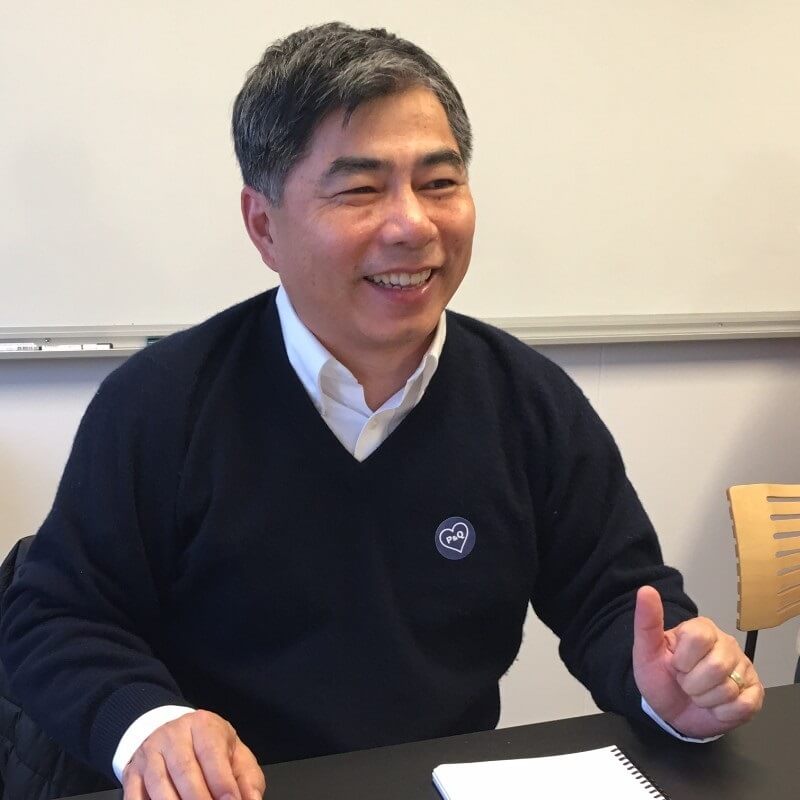 Andrew Chang, PhD is a
multifaceted quality and CMC leader with 28 years of experience in medical product regulation. Chang is the chair for the BioAB at the PDA and a Board of Director for PDA and CASSS-Sharing Science Solutions. In Chang's current role as a Vice President
of Quality and Regulatory Compliance, Regulatory Policy and Intelligence and Global Regulatory Affairs at Novo Nordisk, he provides strategic leadership on regulatory and quality related policy, external Affairs, strategic advice and solutions
to quality and regulatory-related challenges.
Andrew Chang, PhD is a
multifaceted quality and CMC leader with 28 years of experience in medical product regulation. Chang is the chair for the BioAB at the PDA and a Board of Director for PDA and CASSS-Sharing Science Solutions. In Chang's current role as a Vice President
of Quality and Regulatory Compliance, Regulatory Policy and Intelligence and Global Regulatory Affairs at Novo Nordisk, he provides strategic leadership on regulatory and quality related policy, external Affairs, strategic advice and solutions
to quality and regulatory-related challenges.
 Cristiana Campa currently works at GSK as External CMC Intelligence Lead, with more than 20 years’ experience in Chemistry, Manufacturing and Control (CMC) for biologics research and development. She is actively promoting dialogue across industry and with
Regulatory Agencies on several topics, including innovative technologies, specifications setting, stability, accelerated development, and pandemic preparedness. For instance, she has been co-chair, committee member and speaker in several PDA events,
co-author of the PDA Technical Report 89, and co- editor of a PDA cross-company book on Quality by Design (QbD). In 2023, she has joined the PDA Board of Directors (cycle 2023-2025), and, since 2024, she is the EFPIA lead in the ICH Expert Working
Group for ICH Q6 (specifications) Guideline revision, co-chair of the PDA Vaccine Interest Group, and chair of the Vaccines Europe/ IFPMA CMC Adaptive Pathways team. Since 2025, she is a member of the Vaccines Expert Committee of the US Pharmacopoeia.
After her PhD and Post-Doc in Chemistry, she has held several leadership roles including Head of Research Laboratory at Bracco Imaging, Head of Analytical Development at Novartis Vaccines, Head of QbD Integration, and Head of Science and Development
Practices, and Global Advisor in Technical R&D at GSK Vaccines.
Cristiana Campa currently works at GSK as External CMC Intelligence Lead, with more than 20 years’ experience in Chemistry, Manufacturing and Control (CMC) for biologics research and development. She is actively promoting dialogue across industry and with
Regulatory Agencies on several topics, including innovative technologies, specifications setting, stability, accelerated development, and pandemic preparedness. For instance, she has been co-chair, committee member and speaker in several PDA events,
co-author of the PDA Technical Report 89, and co- editor of a PDA cross-company book on Quality by Design (QbD). In 2023, she has joined the PDA Board of Directors (cycle 2023-2025), and, since 2024, she is the EFPIA lead in the ICH Expert Working
Group for ICH Q6 (specifications) Guideline revision, co-chair of the PDA Vaccine Interest Group, and chair of the Vaccines Europe/ IFPMA CMC Adaptive Pathways team. Since 2025, she is a member of the Vaccines Expert Committee of the US Pharmacopoeia.
After her PhD and Post-Doc in Chemistry, she has held several leadership roles including Head of Research Laboratory at Bracco Imaging, Head of Analytical Development at Novartis Vaccines, Head of QbD Integration, and Head of Science and Development
Practices, and Global Advisor in Technical R&D at GSK Vaccines.
 Peter Makowenskyj, MEng has
20 years of experience in the pharmaceutical and biopharmaceutical industries, focusing on process engineering and facility design. At G-CON Manufacturing since 2016, he has advised on cGMP facility design using prefabricated cleanrooms. He holds
a B.S. and M.Eng. degree in Chemical Engineering from Cornell University and is active in the PDA, serving as BioAB vice-chair and co-leading key initiatives in advanced manufacturing and mobile facilities.
Peter Makowenskyj, MEng has
20 years of experience in the pharmaceutical and biopharmaceutical industries, focusing on process engineering and facility design. At G-CON Manufacturing since 2016, he has advised on cGMP facility design using prefabricated cleanrooms. He holds
a B.S. and M.Eng. degree in Chemical Engineering from Cornell University and is active in the PDA, serving as BioAB vice-chair and co-leading key initiatives in advanced manufacturing and mobile facilities.
 Toni Manzano is the co-founder
and CSO of Aizon, a cloud company that provides big data and AI SaaS platforms for the biotech and pharma industries. Manzano is also co-chair of both the Biomanufacturing IG and the CPV of the future initiative at PDA, an active collaborator
in the AI initiative for AFDO and he teaches AI subjects at universities (UAB and OBS). Manzano has written numerous articles in the pharma field and holds a dozen international patents related to the encryption, transmission, storage and processing
of large volumes of data in regulated environments in the cloud.
Toni Manzano is the co-founder
and CSO of Aizon, a cloud company that provides big data and AI SaaS platforms for the biotech and pharma industries. Manzano is also co-chair of both the Biomanufacturing IG and the CPV of the future initiative at PDA, an active collaborator
in the AI initiative for AFDO and he teaches AI subjects at universities (UAB and OBS). Manzano has written numerous articles in the pharma field and holds a dozen international patents related to the encryption, transmission, storage and processing
of large volumes of data in regulated environments in the cloud.
 Ben Stevens PhD, is Director of CMC Policy and Advocacy at GSK, with nearly 15 years of experience in drug discovery, regulatory affairs, and policy. Before joining GSK, he was Director of Regulatory Affairs CMC at Alnylam, leading the global clinical CMC
development and regulatory submissions for vutrisiran. Earlier, Ben served as a Principal Consultant at PAREXEL and Acting Branch Chief in the FDA’s Office of New Drug Products, where he collaborated with policy groups, CDRH, and USP. He
began his career in medicinal chemistry R&D at Pfizer and Merck. Ben’s regulatory CMC expertise spans small molecules, oligonucleotides, biologics, and CGT. He holds a Ph.D. in Chemistry from the University of Pittsburgh and an M.P.H.
from Johns Hopkins.
Ben Stevens PhD, is Director of CMC Policy and Advocacy at GSK, with nearly 15 years of experience in drug discovery, regulatory affairs, and policy. Before joining GSK, he was Director of Regulatory Affairs CMC at Alnylam, leading the global clinical CMC
development and regulatory submissions for vutrisiran. Earlier, Ben served as a Principal Consultant at PAREXEL and Acting Branch Chief in the FDA’s Office of New Drug Products, where he collaborated with policy groups, CDRH, and USP. He
began his career in medicinal chemistry R&D at Pfizer and Merck. Ben’s regulatory CMC expertise spans small molecules, oligonucleotides, biologics, and CGT. He holds a Ph.D. in Chemistry from the University of Pittsburgh and an M.P.H.
from Johns Hopkins.
 Gert Thurau, PhD, is the Head of Advocacy for Manufacturing Technology and Innovation in the CMC Reg PTR Policy team at Hoffmann-La Roche in Basel, Switzerland. His responsibilities include regulatory advocacy for the adoption of advanced technologies in GMP
manufacturing—covering areas such as continuous processing, the use of process models, robotics and artificial intelligence, and novel QC methods. Recently, he has been very active in external policy discussions on topics related to “AI
in Manufacturing,” including registration and GMP aspects.
Gert Thurau, PhD, is the Head of Advocacy for Manufacturing Technology and Innovation in the CMC Reg PTR Policy team at Hoffmann-La Roche in Basel, Switzerland. His responsibilities include regulatory advocacy for the adoption of advanced technologies in GMP
manufacturing—covering areas such as continuous processing, the use of process models, robotics and artificial intelligence, and novel QC methods. Recently, he has been very active in external policy discussions on topics related to “AI
in Manufacturing,” including registration and GMP aspects.
 Hugo Ta is Senior Manager of Quality
Policy & Advocacy at Gilead Sciences. In this role, he works within Gilead’s global policy, advisory, and intelligence community to navigate the regulatory landscape—particularly in areas related to Quality and CGMP. Hugo also
collaborates with internal and external stakeholders across several industry organizations to advance harmonization and innovation. He holds a bachelor's degree in mathematics from the University of California, Berkeley, and has 15 years of experience
in the pharmaceutical industry spanning both GMP and GCP roles.
Hugo Ta is Senior Manager of Quality
Policy & Advocacy at Gilead Sciences. In this role, he works within Gilead’s global policy, advisory, and intelligence community to navigate the regulatory landscape—particularly in areas related to Quality and CGMP. Hugo also
collaborates with internal and external stakeholders across several industry organizations to advance harmonization and innovation. He holds a bachelor's degree in mathematics from the University of California, Berkeley, and has 15 years of experience
in the pharmaceutical industry spanning both GMP and GCP roles.
 Lisa Wright brings over a decade of experience in the pharmaceutical and biopharmaceutical industries. She has held multiple positions with a primary focus on regulatory affairs and policy. In her current role at Novo Nordisk, Lisa engages with the FDA on
regulatory CMC and device issues, advocating for advancements in areas such as advanced manufacturing, platform manufacturing technologies, and combination products. Before joining Novo Nordisk, she worked with several consulting firms, including
Booz Allen Hamilton, where she supported clients at both CDER and CDRH within the FDA. Lisa began her career at the National Cancer Institute, conducting nonclinical research on keratinocyte tumorigenesis. She holds a Master of Science in Bioinformatics
from Johns Hopkins University and a Bachelor of Science in Biology from the University of Maryland, College Park.
Lisa Wright brings over a decade of experience in the pharmaceutical and biopharmaceutical industries. She has held multiple positions with a primary focus on regulatory affairs and policy. In her current role at Novo Nordisk, Lisa engages with the FDA on
regulatory CMC and device issues, advocating for advancements in areas such as advanced manufacturing, platform manufacturing technologies, and combination products. Before joining Novo Nordisk, she worked with several consulting firms, including
Booz Allen Hamilton, where she supported clients at both CDER and CDRH within the FDA. Lisa began her career at the National Cancer Institute, conducting nonclinical research on keratinocyte tumorigenesis. She holds a Master of Science in Bioinformatics
from Johns Hopkins University and a Bachelor of Science in Biology from the University of Maryland, College Park.