


Preventing Condensation in Cleanrooms
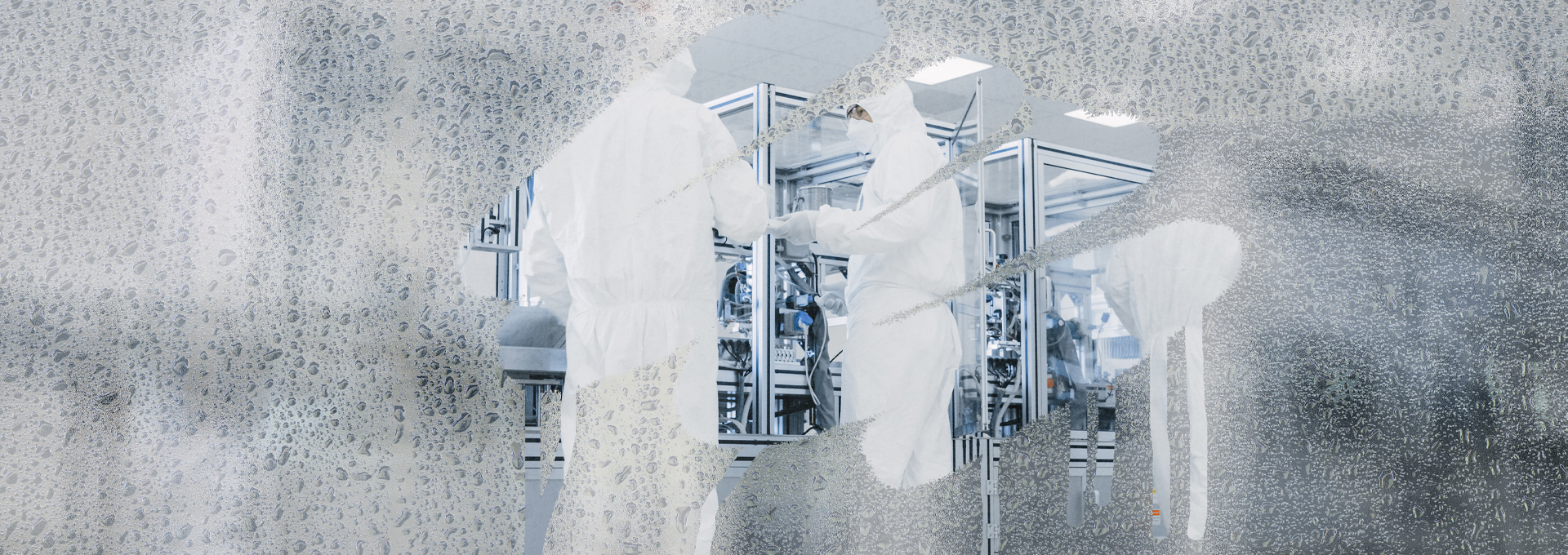
The 2022 EU GMP Regulations, Annex 1: Manufacture of Sterile Medicinal Products, wisely promoted the concept of a contamination control strategy (CCS) to achieve a higher level of sterility assurance through risk management in sterile product manufacturing.
An area that deserves greater attention is temperature and humidity control, largely for gowned operator comfort, discouraging fungal growth, and preventing condensation on cold surfaces. If you recall your Earth Science course in high school, air maintained at a more elevated temperature and humidity will contain greater levels of moisture. For water to condense on a cold surface, the temperature of that surface must fall below the dew point temperature of the air in the cleanroom. Filling needles in a cleanroom often falls below the dew point during the dispensing of refrigerated drug products, leading to water condensation that may promote microbial contamination or dilute the product.
GMP Recommendations for Cleanroom Temperature and Humidity
The temperature and humidity levels in pharmaceutical cleanrooms are often defined by GMP standards. These facilities may need to maintain a temperature range of 18°C to 25°C (64°F to 77°F) and a relative humidity range of 30% to 65%. However, I could not find a definitive recommendation in the EU GMP regulations and related documents, so your decisions will be guided by industry practice and local judgment.
Adverse Effects of Cleanroom Temperature and Humidity
The following are potential adverse effect of temperature and humidity levels in cleanrooms:
- Static electricity build-up and discharge due to low humidity (<30% RH)
- Microbial growth especially fungal growth on facility surfaces due to high humidities (>60% RH)
- Corrosion of metal components due to high humidities
- Reduced solvent evaporation due to high humidities
- Personnel discomfort due to dehydration from low humidities (<30% RH) and overheating due to high temperatures (>75°F).
- Condensation on cold surfaces due to high humidity and temperature (below dew point)
Calculation of the Dew Point Temperature
To calculate dew point temperature, you need to know the air temperature and relative humidity. A common method uses the Magnus-Tetens Approximation, solving for dew point (Td) with the equation: Td = T - ((100 - RH)/5) for T in °C, or more accurately with the formula Td = (c * ln(RH / 100) + (b * T)) / (b - ln(RH / 100)) for T in °C, where b=17.625 and c=243.04.
Using the simplified approximation (for general use):
- Measure the current air temperature (T) and the relative humidity (RH).
- Apply the formula: Td = T - ((100 - RH)/5).
- Substitute your temperature and RH values into the equation to find the dew point temperature (Td).
Example: If the air temperature is 25°C and the relative humidity is 50%, the calculation is: Td = 25 - ((100 - 50)/5) = 25 - (50/5) = 25 - 10 = 15°C.
Risk Mitigation
How can the risk of condensation be mitigated? The temperature and relative humidity in the cleanroom can be lowered to prevent condensation, or the temperature of the product being processed can be maintained above the dew point temperature to control the surface temperatures of transfer and filling lines, filling needles, and even filled containers. A disadvantage may be that very low humidity may promote static electricity, with charged particulates accumulating on facility surfaces and be uncomfortable for the cleanroom operators. The advantages include that a low product storage temperature may enhance product stability and discourage microbial growth. This may be more important with biological products than traditional drug products.
Dew Point Calculation Charts
These charts may be useful to determine the dew point temperature.
- Temperatures in °F
Dew Point Calculation Chart in Fahrenheit Relative Humidity (%) Ambient Air Temperature (°F) 40 50 60 70 80 60 27 36 45 55 64 55 25 34 43 53 61 50 23 31 40 50 59 45 21 29 37 47 56 40 18 26 35 43 52 35 16 23 31 40 48 30 12 20 28 36 44 Surface Temperature at which Condensation Occurs - Temperatures in °C
Dew Point Calculation Chart in Celsius Relative Humidity (%) Ambient Air Temperature (°C) 21 24 27 29 32 60 13 16 18 21 23 55 12 14 17 19 22 50 10 13 15 18 20 45 8 11 13 16 18 40 7 9 12 14 17 35 4 7 10 12 15 30 3 5 12 10 12 Surface Temperature at which Condensation Occurs
HVAC System for the Control of Temperature and Humidity
In addition to standard HVAC units in a cleanroom, according to the aseptic operation supplemental temperature and humidity control units may be used.
Conclusion
In the absence of definitive GMP regulations for temperature and humidity, sterile drug manufacturers should set their ranges based on the requirements of their operation and take a risk-based approach to this sometimes-overlooked issue.
References
- Lawrence, M. G. 2005 The Relationship between Relative Humidity and the Dewpoint Temperature in Moist Air – A Simple Conversion and Applications BAMS February 2005 pp 225-233
LAMTEC Corporation Dew Point Table. Technical Bulletin No. 10
About the Author
-

Tony Cundell, PhD, Microbiological Consulting, LLC
Cundell is the Principal Consultant at Microbiological Consulting, LLC, Rye, New York, and a member of the PEMM Working Group. Cundell consults with a number of pharmaceuticals, consumer health, and dietary supplement companies, microbiology instrument manufacturers, contract testing laboratories, and sterile compounding pharmacies in the areas of microbial risk assessment, regulatory affairs, and microbiological testing.