

Planning for a Dual-Method Future LAL and Recombinant Testing Together
The Limulus Amebocyte Lysate (LAL) test has long played a central role in bacterial endotoxin testing (BET), supporting patient safety in pharmaceutical manufacturing. While LAL is now an established standard, its journey to regulatory acceptance was slow and uncertain. Today, recombinant reagents—Recombinant Factor C (rFC) and Recombinant Cascade Reagent (rCR)—follow a similarly complex path.
The LAL test was developed in the 1960s based on the unique clotting reaction in horseshoe crab blood when in the presence of endotoxins. Although the biological sensitivity of LAL was quickly noted, regulators were initially hesitant. They questioned its consistency and reproducibility compared to the long-used Rabbit Pyrogen Test (RPT). Early on, there was no harmonized global approach, as regulatory agencies had varying expectations around validation, reactivity and the interpretation of results. In addition, concerns surrounding lot-to-lot variability and the biological nature of the test made it sensitive to environmental and handling factors. Over time, widespread use, scientific validation and gradual harmonization helped LAL become firmly established in regulatory frameworks worldwide.
While rFC has been available since 2003, the widespread adoption of recombinant reagents has only gained momentum in recent years. Growing demand for sustainable testing, alongside regulatory and investor pressure, has accelerated this shift. To support this shift, the United States Pharmacopeia USP (USP) collects data from vendors and manufacturers to inform the adoption of “USP Chapter <86> Bacterial Endotoxins Test Using Recombinant Reagents” into product-specific monographs. Broader data submission will help make recombinant technologies fully compendial and easier to implement.
USP <86>, made official in May 2025, marks an important step toward making recombinant reagents fully compendial. While it includes both rFC and rCR, recombinant methods remain an alternative method unless referenced in a specific monograph and must align with General Notices 6.30. Since validation approaches vary across suppliers, labs should carefully review and assess each supplier’s data package to ensure it meets internal standards and regulatory expectations.
The promise of recombinant reagents is substantial, as they address conservation concerns, offer a consistent, robust BET and support sustainability goals across the pharmaceutical industry. However, like LAL years ago, regulatory acceptance of rCR has not been immediate or universal.
Sustainability
The Atlantic horseshoe crab (Limulus polyphemus) is native to the eastern seaboard of North America, from Massachusetts to the Gulf of Mexico. This species has remained largely unchanged for nearly 450 million years; however, this longevity does not guarantee a prosperous future. In recent decades, concern has grown for the management of horseshoe crabs worldwide, primarily due to fishing pressures associated with the bait industry in North America and food fishing in Asia.
A key factor in the horseshoe crab’s survival is the function of its single blood cell, the amoebocyte. Amoebocytes degranulate in the presence of endotoxin, causing coagulation and thus providing immune protection from gram-negative bacteria. In 1964, doctors Frederick Bang and Jack Levin published their discovery of this immune response. Recognizing the sensitivity and speed of the reaction, they saw its potential to replace the rabbit pyrogen test and introduced what became known as LAL.
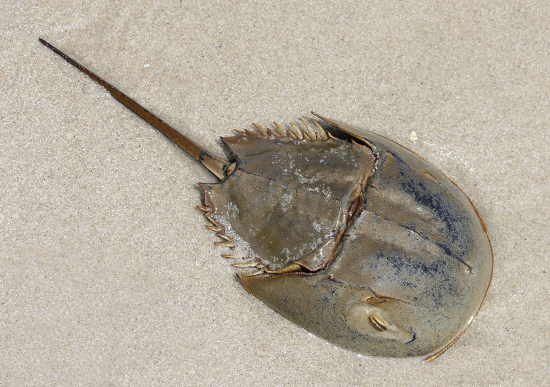
Although the potential of LAL was recognized early, the U.S. Food and Drug Administration (FDA) did not approve it as a finished product test until 1983. Much of the delay stemmed from concerns about the biological nature of LAL and variability between production lots. Another contributing factor was concern about the potential impact of collecting amoebocytes on coastal horseshoe crab populations. In fact, a condition of the FDA’s 1977 licensing of LAL manufacturers was a “return to sea” policy, which required that any horseshoe crabs collected for LAL production be handled carefully and returned alive to the same state or federal waters from which they were taken. Although no longer specifically required by the FDA, this policy remains in place for all FDA-licensed LAL manufacturers and is mandated by LAL-fishery permits in most, if not all, states with such fisheries.
Many LAL manufacturers in North America have long supported the conservation of horseshoe crabs. In 1991, South Carolina had no laws in place to protect the species. James Cooper, founder of Endosafe (now part of Charles River), and his wife, Francis, led efforts to educate the state legislature on the importance of this invertebrate species. Their advocacy helped pass a 1992 law limiting collection to LAL manufacturing or biological research, both of which required permits. These protections remain in place today. The industry has also helped prevent the crab’s use as bait through both legal protections and the development of viable alternatives, such as synthetic baits and bait bags, to minimize waste.
Several LAL manufacturers participate in hatchery programs that return juvenile horseshoe crabs to the wild. These include crabs raised from wild-fertilized eggs collected under a permit or from eggs harvested from bait industry specimens. A single firm is currently credited with releasing more than a million young crabs into the environment without even considering the number contributed by other manufacturers.
These manufacturers also support research on Limulus populations, reporting cell collection data to state agencies and often collaborating with them to gather additional information on population size and distribution. When specimens are collected in one location, it’s an opportunity to place or observe US Fish and Wildlife tags, assess genetic diversity, or gather life history data. Beyond this, manufacturers fund external research through programs like SEAGrant and academic or zoological institutions. In 2011, several companies contributed over $100,000 to fund the Virginia Tech Trawl Survey—the only survey focused on tracking Limulus polyphemus in coastal waters.
As part of its management efforts, the Atlantic States Marine Fisheries Commission (ASMFC) produces stock assessments every 5–10 years to monitor population health, fishing activity, biomedical use and bycatch impacts. For Atlantic horseshoe crabs, this includes harvest for bait, collection for biomedical purposes (a term ASMFC uses to refer to LAL manufacture) and bycatch. In its 2019 assessment, statistical modeling using the Adaptive Resource Model (ARM) found no measurable impact from biomedical collection on horseshoe crab populations (1). By 2022, the adult population in Delaware Bay alone was estimated at 56 million. Even if all known mortality from LAL manufacturing along the East Coast were attributed to this subpopulation, it would account for only about 0.25% of its adult population (2).
Despite no measurable population impact, LAL manufacturers have worked for over a decade to reduce their footprint. In 2011, a joint working group of LAL manufacturers and ASMFC developed the document Best Management Practices for Handling Horseshoe Crabs for Biomedical Purposes (BMPs) for collecting horseshoe crabs with minimal stress or injury (3). These practices were adopted into company standard operating procedures and included in many state license/permit requirements to allow the collection or transportation of Limulus for LAL. In 2023, a review of the BMPs confirmed that the original guidance remained relevant. While no major changes were made, the updated version expanded the scope (4).
Innovation has also helped reduce reliance on raw lysate. Early tests, like gel-clot assays, consumed large volumes of LAL, limiting test output per liter. Chromogenic assays cut lysate use by 54% compared to traditional methods. Microfluidic tests now offer up to a 95% reduction in lysate per assay. Today, recombinant reagents provide options that eliminate the need for lysate.
Gaining Traction
As recombinant BET methods gained recognition for their sustainability, global adoption began to shift. The entry of multiple vendors gave labs more options to evaluate and compare. This flexibility helped customers find solutions tailored to their needs and reduced reliance on a single supplier. The added security of multiple sourcing options addressed a long-standing barrier to adoption.
Recombinant BET is becoming more widely used and accepted by the endotoxin testing industry as customers begin comparative studies and regulatory guidelines continue to evolve. Still, the shift is expected to be gradual, as companies weigh the benefits of implementing a new technology in their laboratories, and LAL will continue to be available for the foreseeable future given its critical role in endotoxin testing and to aid in legacy testing, validation and comparative studies between methods.
Technical, financial, regulatory and sustainability challenges have shaped BET's path forward. However, as recombinant technologies mature and regulatory clarity improves, these methods are poised to become trusted components of quality control in biological and pharmaceutical manufacturing.
Conclusion
Sustainable practices, including resource conservation and testing methods, have shaped the evolution of bacterial endotoxin testing since the 1940s. LAL has long dominated the field, but recombinant technologies now offer labs new options. Regulatory updates, including USP Chapter <86>, reflect this shift and offer practical guidance for implementation across global markets.
References
- Atlantic States Marine Fisheries Commission. 2019. Horseshoe Crab Benchmark Stock Assessment and Peer Review Report. Arlington, VA.
- Atlantic States Marine Fisheries Commission. 2024. 2024 Horseshoe Crab Stock Assessment Update. Arlington, VA.
- Atlantic States Marine Fisheries Commission. 2011. Horseshoe Crab Biomedical ad-hoc Working Group Report. Washington, DC.
- Atlantic States Marine Fisheries Commission. 2023. Best Management Practices for Handling Horseshoe Crabs for Biomedical Purposes. Arlington, VA.
About the Author
-

Nora Blair, Charles River
Nora Blair is Senior Manager of Formulations and Natural Resource Conservation for Charles River Labs Microbial Solutions, based in Charleston South Carolina. She has earned a Bachelor and a Master of Science degree, both in Marine Biology and has worked within CRL for more than 10 years now. As someone highly driven by purpose she is very grateful to contribute to both human health and sustainability with her work.